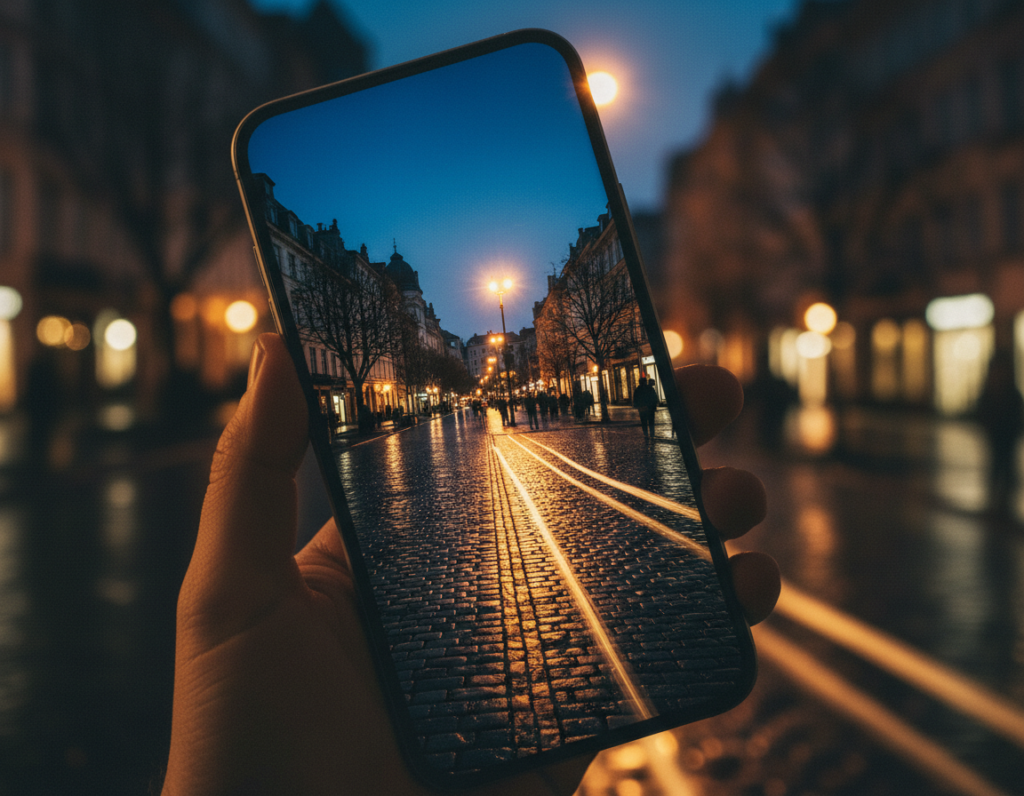
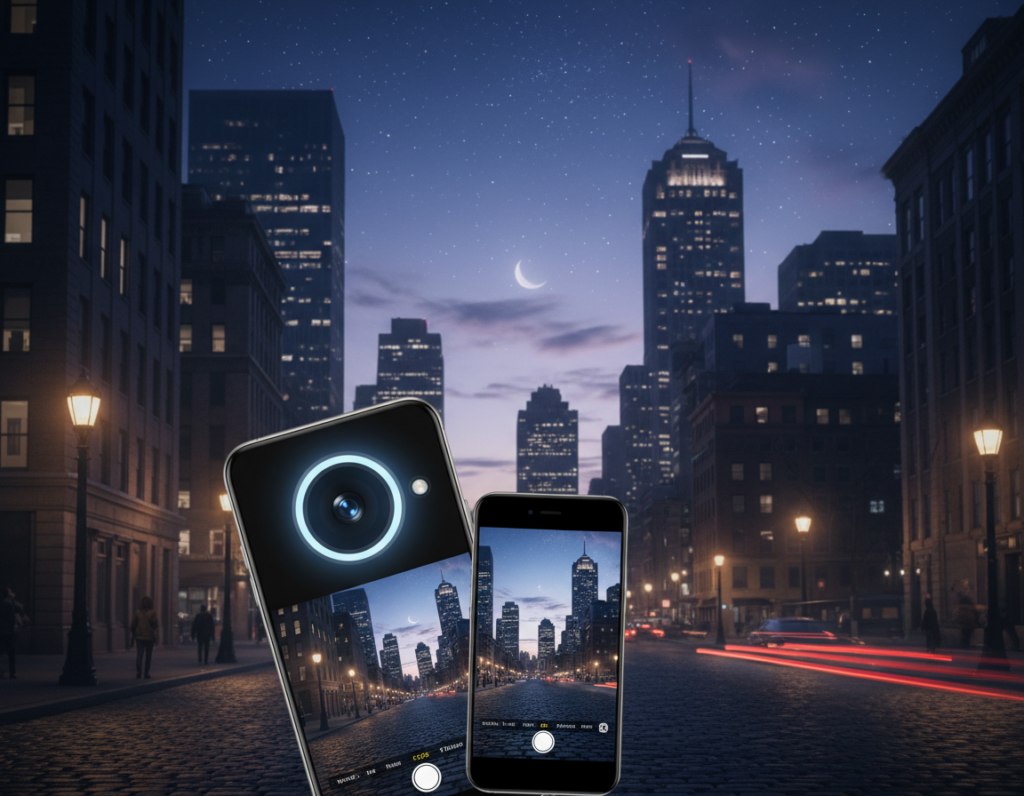
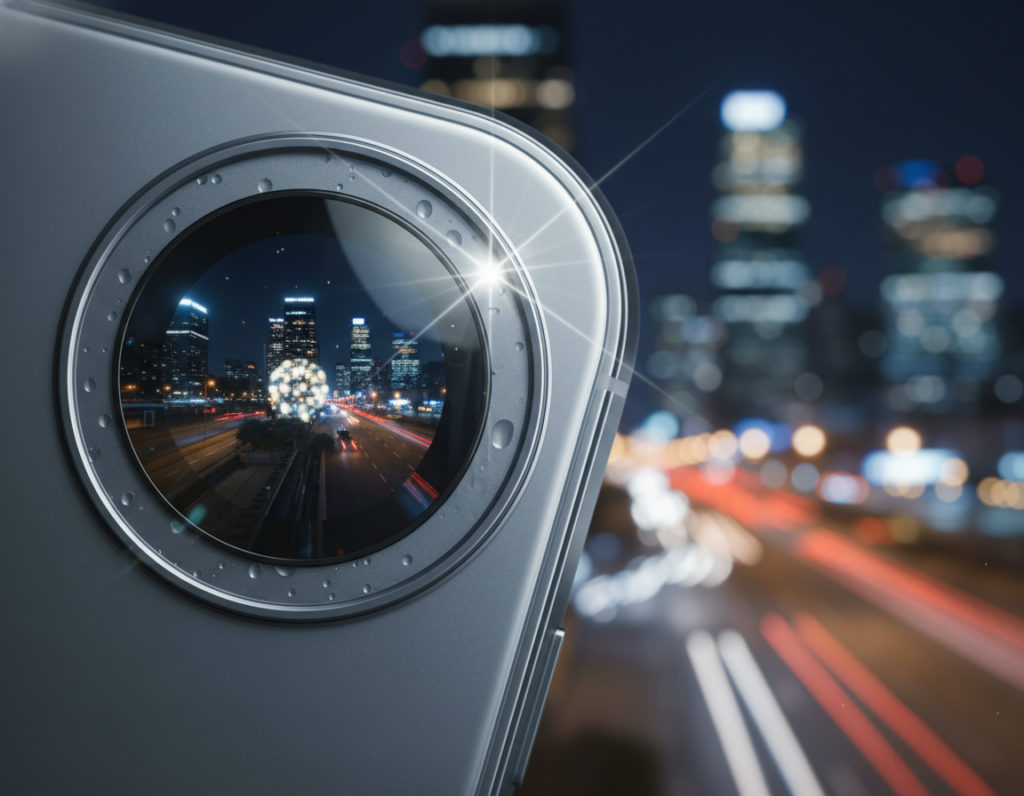
What this phrase means in 2026: it describes how a phone camera turns dim scenes into usable detail without destroying texture. Expect clear skin tones, preserved highlights, and shadow detail rather than just a brightened frame.
This guide will explain the tech in plain terms and then tie that to real buying choices for readers in the United States. We focus on what matters at night for travel, concerts, streets, and restaurants.
Two pillars drive gains: better hardware — larger sensors, wider apertures, and stabilization — and smarter processing, like multi-frame stacking and AI noise reduction. Both must work together to lift exposure while keeping natural color and clean shadows.
Why this matters: people judge images instantly on social feeds. The best systems do more than brighten; they preserve texture and tone. Later we review Pixel, iPhone, Galaxy, Xiaomi, Honor, and VERTU models and note what each brand favors for night photography.
Why low-light photography is still the toughest test for smartphone cameras
Dark scenes force every part of a camera system to do more with fewer photons.
Good night images rest on three things: real detail, controlled noise, and believable color under mixed light. Capture must keep texture without waxy smoothing and avoid over-sharpened edges that fake detail.
Low illumination stresses exposure choices. Longer shutters brighten a frame but invite blur. Shorter shutters reduce motion blur but raise visible noise because the sensor gets fewer photons.
The biggest failures are familiar: handshake blur, moving subject blur, ghosting, clipped neon highlights, and crushed blacks. Bright street lamps and signs commonly blow highlights; preserving those burns while holding shadow texture is a mark of a strong image pipeline.
Over-aggressive noise reduction smears dark walls and hair, creating watercolor artifacts in shadows. Judge results by faces, text on signs, shadow texture, and color consistency — not just overall brightness. Next we show how hardware and computational fixes target these exact failure modes.
How smartphone photography caught up to dedicated cameras over time
A single handheld device rewrote photography habits and put a camera in every pocket.
Convenience changed the workflow. By 2011, DXOMARK noted over a quarter of photos were shot on phones. Capture → edit → share became instant, removing the friction of offloading files and using a desktop. That shift made phones the default tool for many photographers and casual users alike.
The biggest technical gap was noise. Smaller sensors capture fewer photons—DXOMARK framed this as reduced “photon flow.” That is a physics limit before any software tries to fix it.
- Smartphone gains stacked: about a 1.3 EV edge from sensor improvements plus ~3 EV from processing.
- Processing advances—100x more compute—enabled multi-frame stacking and temporal noise reduction.
- These pipelines align frames, fuse exposure data, and simulate extra light without destroying texture.
That multi-stop leap explains why a phone image can rival a larger camera in some night scenes, even if results vary with motion and scene complexity. Next we look at what’s changed in sensors, lenses, and stabilization to feed better data into these pipelines.
Modern smartphone cameras low light performance: what actually improved
Hardware, not just software, made night shots reliably better. Bigger sensors, brighter lenses, smarter sensor layouts, and steadier optics all feed cleaner raw frames. That means algorithms have less work and can preserve texture instead of smearing shadows.
Larger sensors and better photon capture
Larger sensors collect more photons per pixel, so images show more true detail and less noise. With more native signal, the system needs milder noise reduction and keeps skin and fabric texture intact.
BSI sensors and why thin phones can still use bigger sensors
Back-side illuminated (BSI) designs pull light from more angles into the photodiodes. DXOMARK notes BSI lets makers fit bigger sensor areas without adding thickness. That improves light collection efficiency and cuts the need for aggressive post-processing.
Wider and variable aperture lenses for flexible exposure
A wider lens (lower f-number) lets more light hit the sensor each exposure. That gives the camera choices: faster shutters for moving scenes or longer exposure for static ones.
Variable aperture — as seen in the Honor Magic 7 Pro — switches between wider and narrower settings. In dim scenes it prioritizes light intake; in bright scenes it improves depth and sharpness.
Optical image stabilization for longer handheld shutter speeds
OIS steadies the main camera so phones can use longer shutters without blur. That raises the success rate of night shots and lets the main sensor remain the primary module for most after-dark scenes.
Takeaway: combine larger sensors, BSI tech, faster lenses, and OIS, and you get a hardware foundation that boosts night shooting without destroying texture.
The computational photography revolution behind Night mode
Behind every clean night shot is a process that stitches multiple frames into a single, clearer result. Night mode is a pipeline, not a simple toggle.
Multi-frame exposure stacking and image fusion
How stacking works
The camera captures many short exposures, aligns them, and fuses data into one final image. Phones prefer shorter frames to avoid handshake blur while keeping moving subjects from trailing.
Temporal noise reduction and preserving texture
Temporal averaging reduces random noise by combining consistent signal across frames. Good processing keeps hair, fabric, and foliage looking natural instead of smudged.
“Stacking multiple shorter exposures enables temporal noise reduction, but fusion can introduce ghosting.”
Motion handling and ghosting: why shots can still fail
Moving people, cars, and trees can misalign frames and cause ghosting or smeared subjects. Aggressive sharpening can add halos and brittle edges around bright sources.
- Best case: static scenes deliver the cleanest results.
- Risky: fast motion, extreme darkness, and mixed lighting still trip the pipeline.
- Goal: raise the “keeper rate” so more usable shots survive quick captures.
Improved algorithms and faster processors reduce artifacts, but expect variability. These tools and technology favor steady scenes and careful framing for the best results.
Key specs that matter most for low-light camera performance
Not all spec-sheet numbers predict usable after-dark photos. Focus on parts that increase captured light and control flare. Bigger sensors and brighter apertures give more real signal; that reduces noise without heavy processing.
Sensor size vs. megapixels: what improves quality and what doesn’t
More megapixels on a tiny sensor often shrinks each pixel and cuts per-pixel sensitivity. That hurts night shoots unless the phone uses binning or strong processing. DXOMARK ties noise directly to how much light the sensor gathers.
Pixel binning and larger effective pixels in dark scenes
Pixel binning combines neighboring pixels to act like larger ones. This raises brightness and lowers noise in dim scenes. It trades pure resolution for usable detail when photons are scarce.
Lens quality and optics: why glass still matters
A wider aperture helps, but coatings, flare control, and sharpness make a real difference around street lamps and signs. Better optics mean fewer ghost reflections and stronger contrast at night.
Quick checklist:
- Sensor size + aperture + OIS > megapixels alone
- Look for effective binning modes
- Assess lens coatings and flare control
- Test Night mode; software can outperform specs — see research on computational imaging here
Zoom after dark: optical zoom, telephoto lenses, and real detail
Reaching for a longer focal length at night usually forces a choice between real detail and mere magnification. Telephoto modules often have smaller apertures and tinier sensors, so they collect less signal per shot. That raises noise and limits shutter choices, making clean zoom shots harder to get.
Optical vs. digital zoom in dim scenes: optical zoom preserves true detail because glass and focal length do the work. Digital zoom only crops and enlarges pixels, which amplifies grain and smears texture when exposure is weak.
Periscope and mechanical options: practical checks
Periscope zoom uses folded optics to give longer focal lengths without a long body. When shopping, check stabilization, aperture, and sensor size—these determine usable reach at night.
Mechanical zooms, such as claims from VERTU Agent Q, move lens groups for true optical change. That can preserve a distinctive look compared with algorithmic approximations, but it remains niche and may add weight and cost.
When the main camera wins after dark
Often the main camera outperforms a telephoto at night because it has the brightest lens and the largest sensor. If the phone switches to a cropped main-camera frame for a cleaner exposure, accept it—real detail is more valuable than raw magnification.
How a strong camera system manages lens switching
- Consistent color and exposure between modules reduces editing work.
- Good systems match tone so a telephoto crop blends with the main camera output.
- Use telephoto for distant signs, performers, or skyline details only when stabilization and aperture support a clean capture.
“Choose the lens that keeps texture and contrast — not just reach.”
How we judge night photo results in real life
We judge night photos by how often a shooter walks away with a keeper, not by a single bright sample. That means testing repeatability across common scenes you’ll actually shoot.
Test suite to try at home:
- City streetlights (moving cars and mixed lamps)
- Indoor warm lighting (restaurants and bars)
- Neon signage (high contrast color)
- Mixed LED environments (shops and transit hubs)
Portraits and real people
For portraits we check skin tone accuracy, face detail, and whether noise reduction preserves texture or wipes it away. A flattering tone can be good, but an over-smoothed result loses identity and fine hair detail.
Consistency across the camera system
Many phones deliver strong results on the main camera but fall off on ultrawide or telephoto modules. We track matched color, exposure, and keeper rate across all lenses so users know what each module reliably produces.
Rendering styles: “natural” vs. “bright”
Natural processing keeps restrained highlights and believable shadows. A brighter style lifts exposure aggressively for pop on feeds but can shift greens or add magenta near highlights.
“Best overall” means consistent results, a high keeper rate, and pleasing rendering across images and video.
Top low-light camera phones to consider right now in the United States
If you shoot nights in the U.S., a few flagship choices rise above the rest for usable after-dark results. Below is a compact shortlist that matches typical needs: portraits, cityscapes, and reach.
Best overall: Google Pixel Pro line
Why it wins: Pixel Pro models lean on AI-driven stacking and color science to lift shadows while keeping texture. Night Sight-style processing is active across rear modules, which raises the keeper rate for tricky scenes.
Most natural-looking results: iPhone Pro Max
Why it wins: The Pro Max approach favors balanced exposure and realistic skin tones. If you want predictable rendering that needs little editing, this phone is the sensible choice.
Best versatility: Samsung Galaxy Ultra
Why it wins: Galaxy Ultra devices pair a high-res main sensor with broad multi-lens flexibility and on-device editing tools. Photographers who like to tweak exposures, crops, and color will appreciate the editing pipeline.
Best hardware-first option: Xiaomi Ultra
Why it wins: Xiaomi’s one-inch-type sensor captures more native signal, so it needs less heavy processing to look good. That hardware advantage helps with detail retention in tight shadows and complex scenes.
Choose based on what you shoot most: portraits, city scenes, or long reach matter more than the brightest sample image. Below we move into focused mini-profiles for each 2026 headliner so you can compare real-world trade-offs.
“Match the phone to your scenes — better keepers come from the right system, not just brighter output.”
Google Pixel 10 Pro XL as the AI-driven low-light benchmark
The Pixel 10 Pro XL focuses on consistency across lenses so you get predictable results after sunset. This phone acts like a baseline for what AI-first capture should deliver in real use.
Night Sight across all rear cameras
Night Sight expanded to every rear lens means fewer surprises when you switch between wide and zoom. The camera system merges short exposures and aligns frames so the final image reads clean and natural.
Portraits and difficult mixed lighting
Pixel-style portrait handling lifts faces while preserving background texture. It avoids waxy skin and keeps shadows believable, so portraits look like real moments, not edited samples.
Camera Coach and computational tools
Camera Coach guides framing, warns of blur, and nudges steadier shooting. These tools raise the keeper rate by improving composition and reducing failed shots.
- Strength: consistent results across lenses.
- Weakness: fast motion, extreme backlight, and very dark zooms can still fail.
- Best for: travelers, parents, and anyone who wants dependable night images with minimal tweaking.
Apple iPhone 17 Pro Max for balanced night photos and standout low-light video
When a device favors believable color over brute brightness, evening photos feel more honest. The iPhone 17 Pro Max aims for that balance—bright enough to read the scene, but restrained so skin and shadows stay natural.
Intelligent Night mode and realistic skin tones
Intelligent Night mode lifts shadows selectively to preserve skin texture and avoid gray, waxy faces. The processing resists extreme shadow boosting and keeps highlights controlled.
Fast control and capture: dedicated camera controls for quick exposure changes
Dedicated Camera Control puts exposure and capture speed within thumb reach. That helps you react to changing scenes without diving into menus, so you get the shot before the moment ends.
Why creators care: stabilized, clean video when light is scarce
Stabilization and consistent color make handheld video usable right out of the phone. Creators get smoother footage, fewer noisy shadows, and predictable color grading in post.
Practical use case: in restaurants, small events, or family moments the iPhone 17 Pro Max delivers quick, flattering photos and reliable video. The improved selfie sensor helps group shots near street lamps or venue lighting, so you capture memories without extra gear.
“Predictable results reduce reshoots and let creators focus on content.”
Samsung Galaxy S25 Ultra for dramatic night shots and telephoto reach
If you want vivid evening shots and long reach, the Galaxy S25 Ultra packages a high-res sensor with robust telephoto options. Samsung tuned the system for punchy color and flexible framing that suits concerts and cityscapes.
High-resolution main sensor and noise reduction in shadows
The 200MP main sensor uses smart binning so the camera keeps fine detail while lowering noise in deep areas. The AI ProVisual engine lifts shadows without creating blotchy patches, aiming to keep texture in hair and fabric.
Telephoto and ultrawide behavior in challenging scenes
Telephoto modules give real reach for distant subjects and framing options, but they still face aperture and motion limits. Expect better zoom framing, yet noise and blur can appear on very dark subjects.
The upgraded ultrawide improves edge detail and color uniformity, though corners can show more grain than the main camera in the darkest scenes.
“Dramatic look plus flexibility: the S25 Ultra is for users who want punchy nights with real zoom options.”
On-device editing tools finish the package, letting you clean noise, tweak exposure, and tune color before sharing. Best for concerts, cityscapes, travel, and anyone who values stylized night shots and strong zoom choices.
Xiaomi 15 Ultra and the rise of larger sensors and Leica-tuned optics
Xiaomi’s 15 Ultra pushes the idea that bigger capture hardware can solve many night problems before software steps in. The phone pairs a one-inch-type 50MP Sony LYT-900 with Leica-tuned optics to deliver a distinct imaging character.
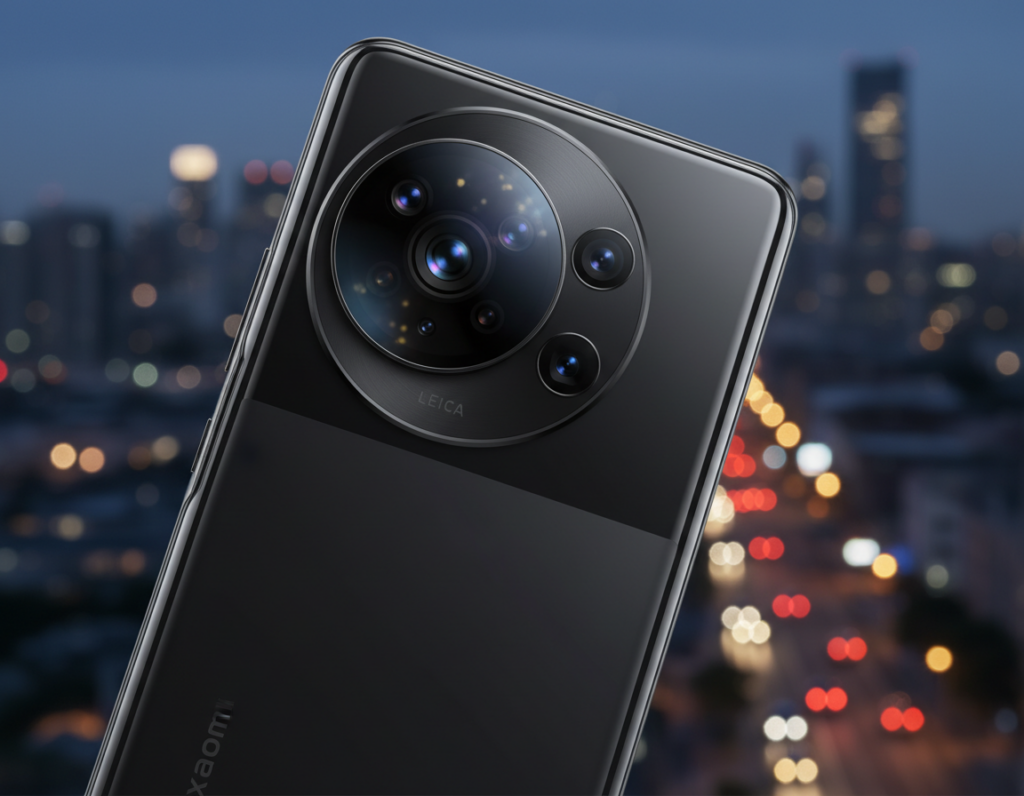
One-inch-type sensor advantages for exposure and detail
The larger sensor gathers more real light, so the system can use safer shutter speeds and keep motion sharp. That yields smoother tonal transitions and better fine detail in shadowed areas.
How sensor size reduces the need for aggressive processing
Because native signal is stronger, the phone needs less heavy denoising and aggressive sharpening. The result is fewer plastic-looking textures and fewer artifacts around point sources.
Low-light video considerations: detail retention and noise behavior
For video, a bigger chip helps keep detail frame-to-frame and limits crawling noise in dark areas. That makes handheld clips look cleaner without heavy temporal filtering.
“Large hardware choices let capture look more camera-like, not just brighter.”
- Why it matters: Leica optics shape contrast and flare for a more filmic render.
- Watch for: some presets may still over-brighten scenes; check rendering before you shoot.
- Best for: enthusiasts who want strong native capture and a distinct imaging character.
Honor Magic 7 Pro, Google Pixel 9a, and VERTU Agent Q for niche needs
Some phones aim at particular photographers rather than headline specs. Below are three focused options that solve clear real-world problems: adaptable exposure, value-first night capture, and a unique mechanical zoom lens for an artistic look.
Variable aperture for adaptable exposure
Honor Magic 7 Pro uses a variable aperture to let you choose more light or deeper depth without changing lenses. In bright streets it narrows to protect highlights; in dim scenes it opens to collect extra photons and reduce motion blur.
Why it helps: you get control over exposure choices on the fly, so more shots are keepers in mixed scenes.
Value-first software that punches above its price
The Google Pixel 9a is a classic software-first option. Its stacking and noise reduction can rival costlier devices in many night scenarios, including astro-style shots, making it a smart pick for budget-conscious photographers.
Mechanical zoom and premium optics for a distinct look
The VERTU Agent Q emphasizes a Swiss-engineered mechanical zoom and “Humanist Lens” craft. This device trades headline specs for a specific tonal and optical character that appeals to creative shooters who value how a scene feels over raw numbers.
Who should pick which
- Travelers: choose the Pixel 9a for dependable sharing and solid night keepers.
- Portrait shooters: Honor’s aperture control helps preserve skin texture and subject separation.
- Zoom-focused photographers: VERTU’s mechanical design gives a unique reach and optical signature.
“Stabilize your shooting—lean, brace, or use a tripod for long exposures—and confirm US network, warranty, and update support before buying niche devices.”
Conclusion
, Great night photos come from better light capture plus smarter image processing working as one.
The central takeaway: strong after-dark results need both a capable sensor and careful processing. The best camera systems balance native signal and multi-frame stacking to keep texture and control noise.
Choose by priority: check the main camera first, then test telephoto and zoom behavior in true night scenes. Look for consistent tone across the camera system and steady keeper rates.
Quick decision map: Pixel for AI consistency and high keeper rate; iPhone for balanced, natural rendering and strong night video; Samsung for reach and versatility; Xiaomi for large-sensor capture and filmic character.
Technique still matters. Brace, steady your hands, or use a tripod for long exposures. Compare real sample images from your typical scenes before you buy a flagship—match features to how you shoot.