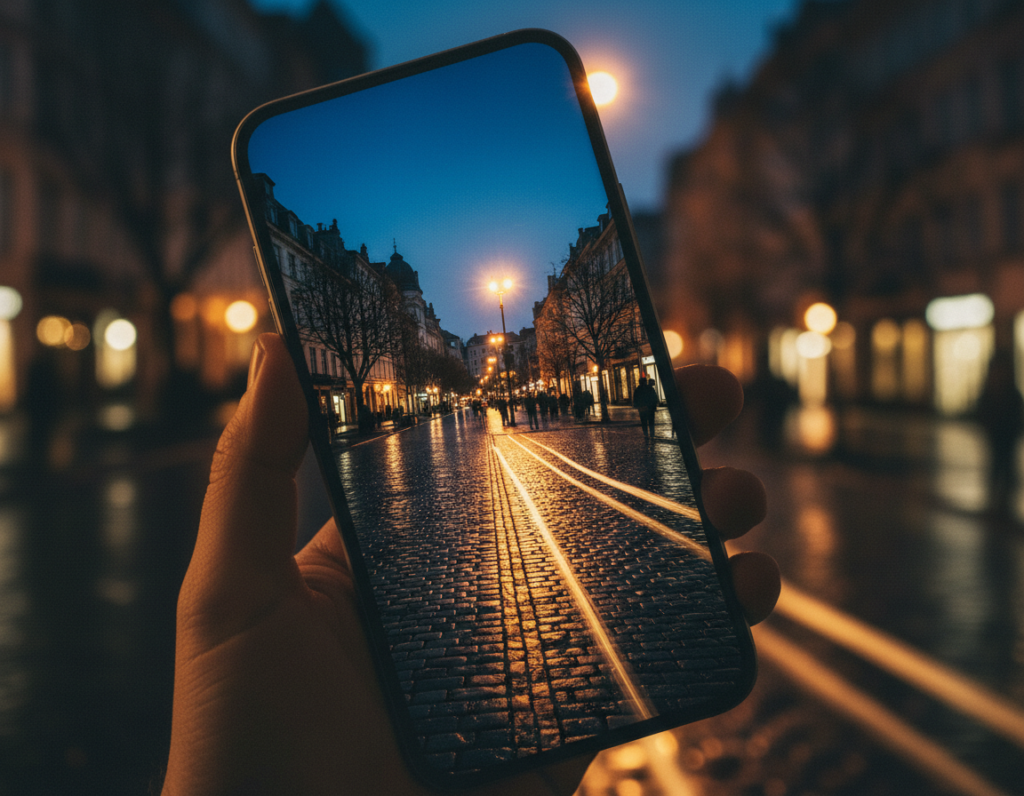
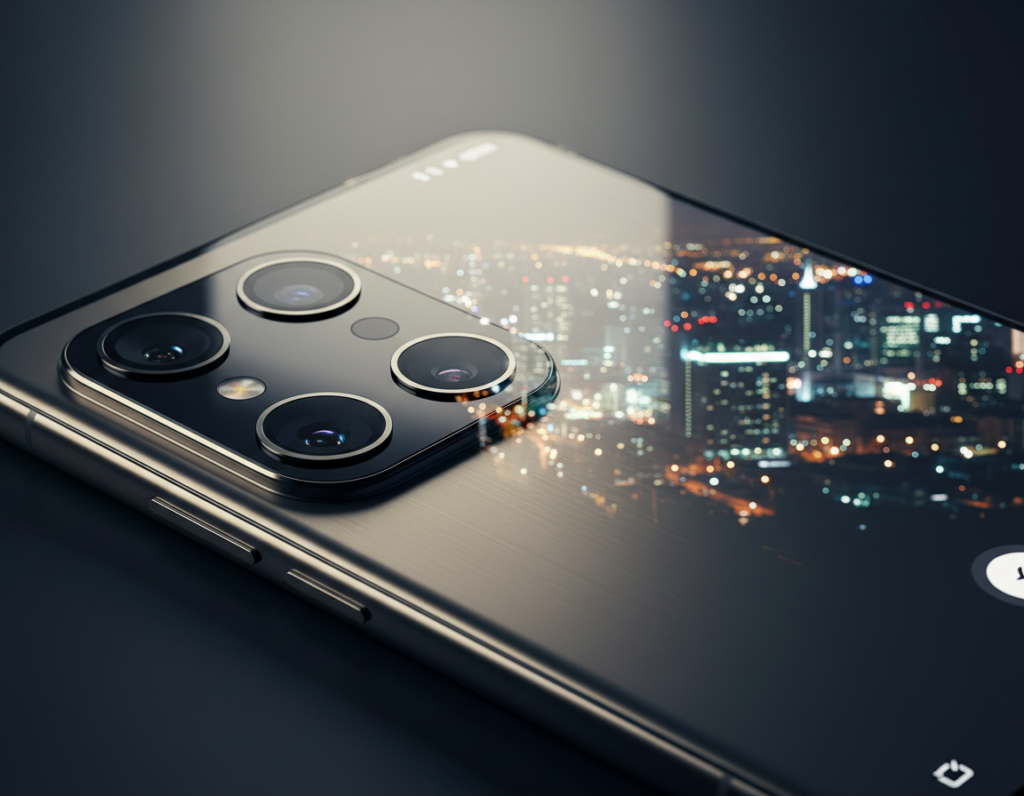
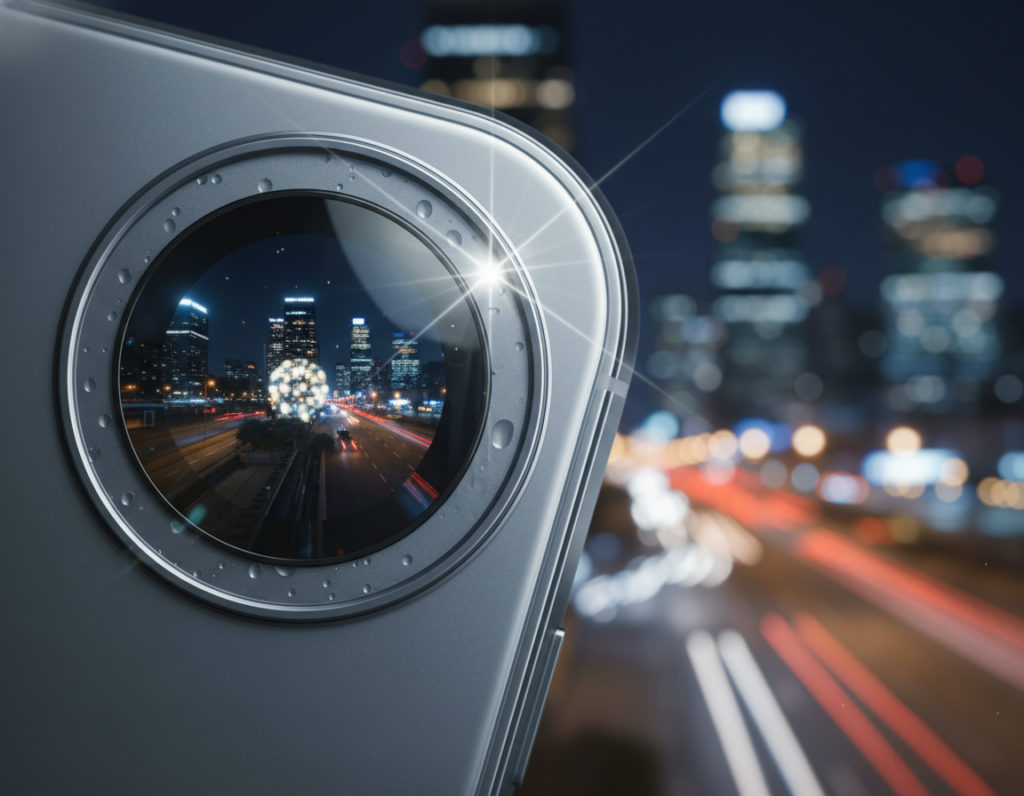
Nighttime image clarity means visible detail, low noise, steady exposure, and preserved highlights and shadows in a single shot. On many recent models, larger capture chips can help with light gathering, but they do not do the whole job alone.
DXOMARK notes that some vendors now market phones with 1-inch capture units, yet brands like Honor, Oppo, Vivo, and Xiaomi pair hardware with heavy software tuning. That processing often decides final image quality more than raw size.
This guide sets realistic expectations. You will learn how sensor size relates to pixel pitch, how stabilization and lens brightness matter, and why multi-frame processing changes results. Expect clear tips on reading specs and practical shooting steps.
For a deeper comparison of real-world results across devices, see a related analysis here: camera comparison in varied lighting. The article will explain why night shots sometimes fail and what actually improves with bigger capture chips, ending with buying and shooting advice.
Why night photos fall apart on smartphones: light, noise, and motion
Low light scenes give a camera far fewer photons to work with. That weak signal makes noise more visible and strips away fine detail in the final image.
With a much smaller capture area, each pixel collects less light. The camera then boosts the signal, which raises grain and lowers clarity. DXOMARK highlights this tradeoff between texture and noise in dim scenes.
Why brightening usually means risk
To brighten a dark frame a camera can increase ISO, lengthen exposure, or merge multiple frames. Each choice has costs.
- Longer exposure: improves brightness but invites motion blur from moving subjects or hand shake.
- Higher amplification: reduces clarity by boosting visible noise.
- Multi-frame processing: can raise brightness while keeping noise down, yet it may ghost moving objects or smear texture.
Common failure modes to watch for
Typical faults include blotchy shadows, over-smoothed textures from aggressive denoising, blown highlights from bright signs, and a sharp drop in overall performance compared to daytime shots.
Next: these limits explain why sensor and pixel area matter — more captured light improves the baseline signal-to-noise ratio before processing begins.
Sensor size basics for smartphones: what “1-inch sensor” and sensor area really mean
The term “1‑inch” is a legacy format label carried over from old video tubes and does not describe a literal one-inch diagonal on modern imaging parts. Manufacturers often express actual parts with fractional types (for example, 1/1.3″) that refer to a format family rather than physical measurements.
Practical definition: the useful spec is the physical light‑gathering area. That area, combined with lens aperture and pixel pitch, determines how many photons each photosite receives and thus affects final image quality.
Estimating area from megapixels and pixel pitch
You can estimate sensing area when you know megapixels and pixel pitch. Multiply megapixels by the square of pixel pitch. For example, DXOMARK’s worked figure: 48 MP × 1.22µm × 1.22µm ≈ 71.44 mm².
Resolution versus photosite area
Two cameras may share resolution but differ in photosite area. Larger photosites collect more light and raise the signal‑to‑noise ratio, which improves low‑light performance and dynamic range.
- Marketing: brands sometimes omit the physical area, so read pixel pitch and MP to compare.
- Real-world: a bigger sensing area generally helps in dim scenes but alters depth of field and focus behavior.
sensor size impact smartphone night photos: what gets better with larger sensors
A bigger light‑gathering area changes the baseline data the camera receives. That stronger input helps downstream processing and often shows up as cleaner, more believable detail in dim scenes.
Better signal-to-noise and preserved texture
More photons per capture raise the signal‑to‑noise ratio, so fine textures — hair, fabric, brick — survive denoising. Cameras can apply less aggressive smoothing and keep texture without worsening grain.
Wider dynamic range, fewer blown highlights
A large sensor usually delivers broader dynamic range. That helps retain both bright streetlights and deep shadows. The result is fewer blown highlights and less crushed blacks in high‑contrast scenes.
Cleaner low‑light video frames
For video, a stronger per‑frame signal prevents noise from accumulating across frames. A large sensor gives editors and users cleaner footage with better frame‑to‑frame consistency.
In practice, a one‑stop gain from a larger capture area can mean cleaner shadows or faster shutter choices at the same brightness. Remember: manufacturers’ tuning still matters — a big sensor raises the ceiling, but software decides the final performance.
The tradeoffs: when a larger sensor can make things harder
When a camera pairs a wide-aperture lens with a big imaging area, parts of a scene can fall out of focus even when noise is low.
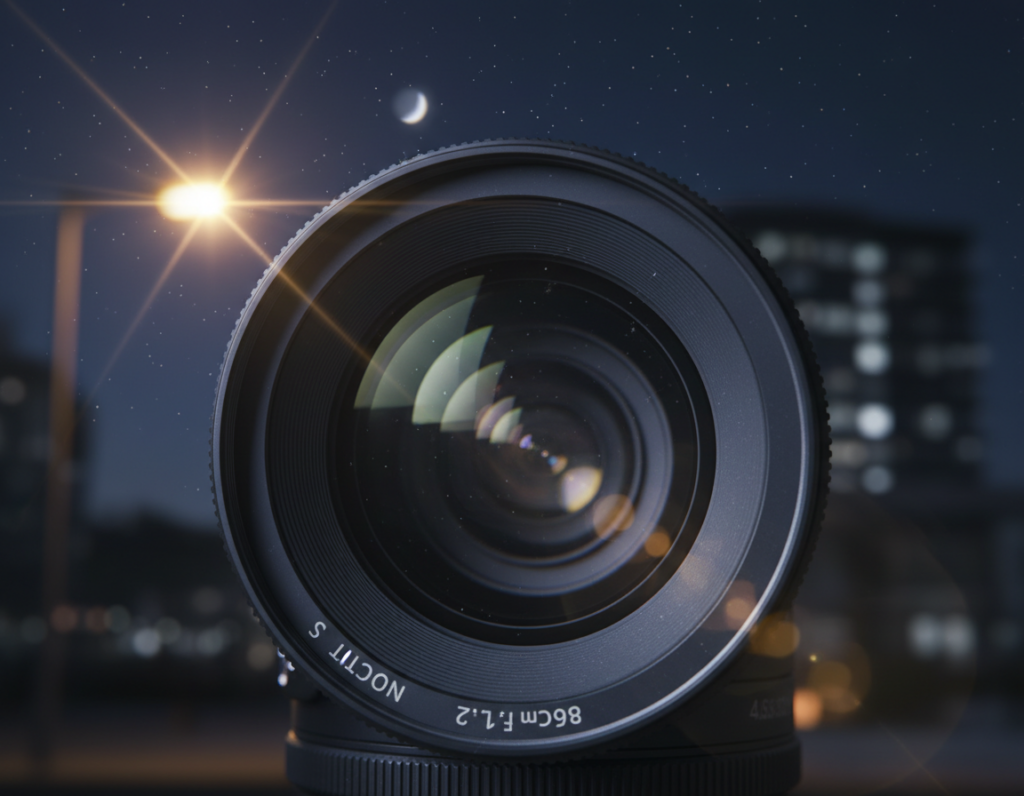
Shallower depth of field can reduce keep-everything-sharp clarity
Why bigger isn’t always sharper: a bright lens and a larger photosite area reduce depth of field. That means near and far elements may not be equally sharp.
Users often call this “softness” even though the camera preserved excellent image quality and low noise.
Autofocus stability challenges in dim scenes with bright lenses
In low light the camera may hunt or pick the wrong focus plane. With shallow focus, tiny errors become obvious on faces, group shots, and broad landscapes.
Because most phones have fixed lenses, you can’t stop down to gain depth. Instead, photographers should use tap-to-focus, place subjects on a common plane, or back away slightly to increase depth of field.
- Affected scenes: landscapes with near-to-far detail, groups, and busy street scenes.
- Balance: shallow depth of field aids subject separation but can reduce keep-everything-sharp clarity in some images.
Next: this is why stabilization and computational fusion often shape final results as much as raw hardware.
Beyond sensor sizes: the other levers that decide nighttime clarity
Beyond the raw chip, other camera tools decide whether a dim scene becomes a clean photograph or a mushy mess. These levers work together to shape exposure, reduce noise, and preserve detail.
Lens aperture and depth tradeoffs
A brighter lens (lower f-number) increases light gathering power and opens more exposure options. That lets the camera use shorter time or lower gain to cut noise.
Warning: a wide aperture reduces depth of field. Focus becomes more critical, and parts of a scene can look soft if the plane of focus is missed.
Optical image stabilization (OIS)
OIS lets you hold the camera longer without handshake blur. DXOMARK finds it can add about 0–2 stops, or roughly up to 4× longer exposure in steady hands.
OIS does not freeze moving people or cars. If subjects move, longer exposure still causes blur on that side of the frame.
Computational fusion and denoising
Many devices capture a dozen short frames and merge them to lift signal‑to‑noise. That fusion often keeps more fine detail than a single long exposure.
But when motion exists, merged images can show ghosting, double edges, or halos. Strong denoising reduces visible noise but can smear hairs, brick, or other small textures.
Tuning is the final part
The best results come from how the camera app balances aperture, OIS, multi-frame fusion, and denoising for each scene. No single spec guarantees top performance.
How to apply this when choosing and shooting with a smartphone camera at night
A careful read of spec sheets and trusted reviews gives the best clue to real low-light performance.
Reading spec sheets and what makers omit
Checklist: check megapixels, pixel size, and independent teardowns or reviews that list the actual imaging area.
What manufacturers hide: labels like “equivalent” can confuse buyers. Two phones with similar printed numbers may differ because of tuning.
Practical shooting settings
Use night mode for dim scenes and brace your elbows. Multi-frame fusion and OIS help, but motion still blurs moving subjects.
If the camera picks a long exposure, avoid moving people or take several frames to improve the odds of a sharp image.
Scene-based tips and framing
For portraits, keep the subject on one plane and watch focus. For landscapes, focus a bit deeper to keep more in range. For city lights, protect highlights and avoid overexposure.
Aspect ratio, cropping, and zooming
Changing aspect ratio often crops the frame and discards pixels. That lowers effective resolution and can make images look softer after zooming.
Repeatable habit: shoot the same scene in default vs night mode and at 1× vs zoom to learn how your phone handles low light.
Conclusion
, More light per photosite generally improves low-light signal, but processing, lens choice, and stabilization finish the frame.
Think of a phone as a system: the chip, the optics, the OIS, and the image engine all shape final output. A larger capture area raises the ceiling for cleaner detail and lower grain, yet it can make shallow depth of field and focus errors more visible.
When comparing models, trust real night samples and repeatable tests more than headline specs. For better everyday results, use night mode when needed, avoid heavy zoom or cropping, and keep the camera steady to give the system the best data to work with.